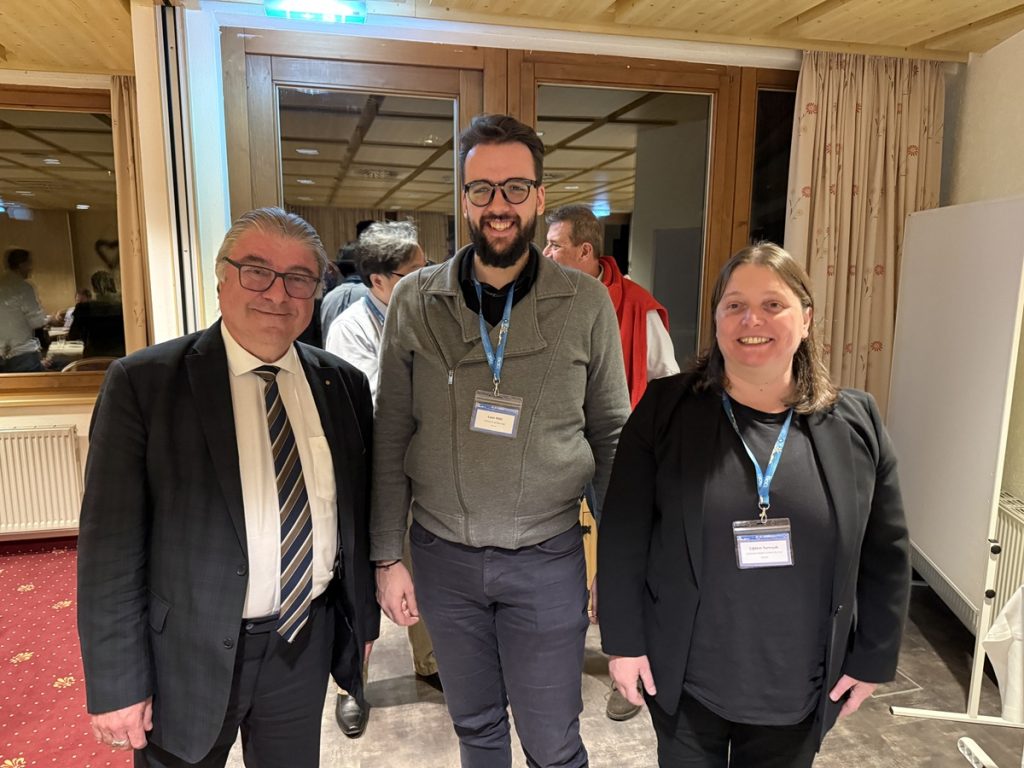
The 10th International Winter School on Bioelectronics (BioEl2025) took place from March 14–21, 2025, in Kirchberg in Tirol, Austria. Organized by the Institute of Physical Chemistry and the Linz Institute for Organic Solar Cells at Johannes Kepler University Linz (JKU).
This milestone event brings together leading researchers, scholars, and early-career scientists to explore the integration of electronics with biological systems.
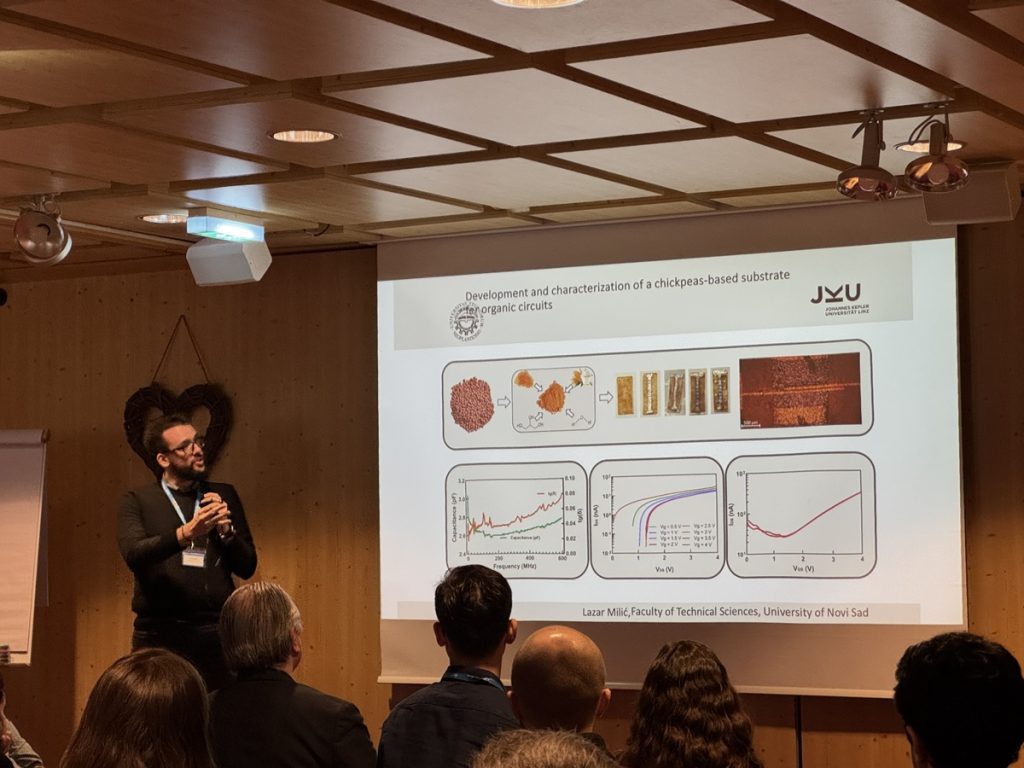
The event featured lectures from renowned scientists, including Jadranka Travaš-Sejdić, George G. Malliaras, and John Rogers. Topics include biomimetic materials, neural interfaces, implantable electronics, biosensing, and bio-compatible semiconductors. The winter school fosters interdisciplinary collaboration and innovation in bioelectronics, offering a dynamic platform for knowledge exchange and networking.
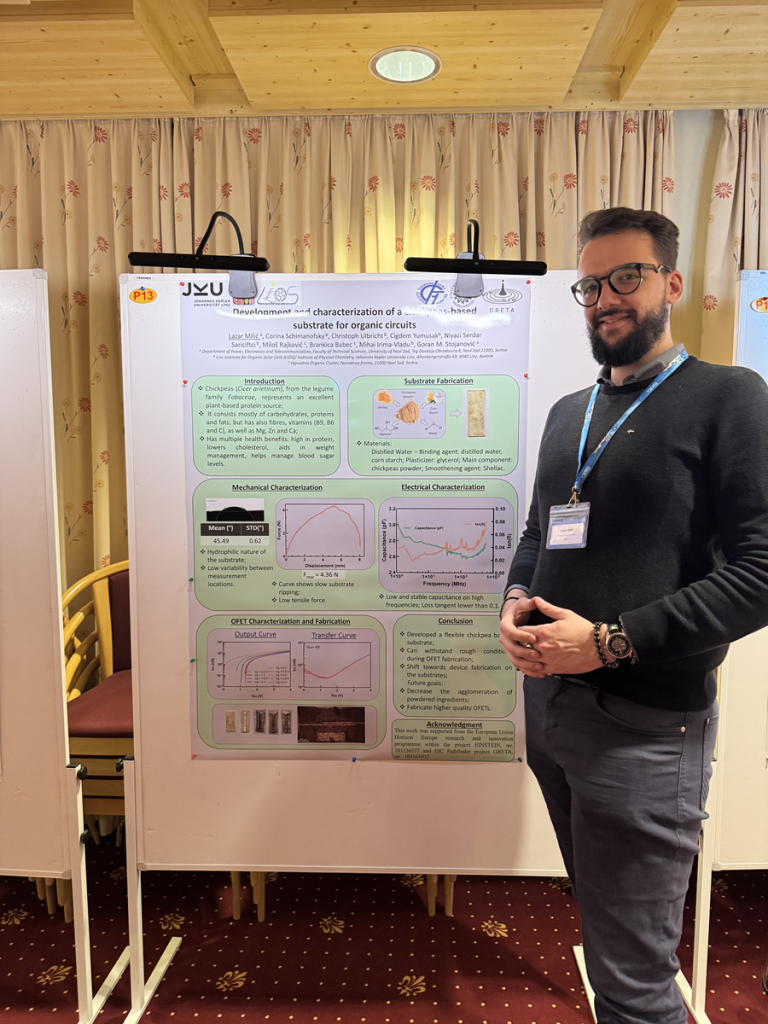
As part of the poster session, Lazar Milić from University of Novi Sad (UNS), presented his work on flexible edible substrates derived from chickpeas.
These substrates demonstrated impressive mechanical and thermal stability, remaining flexible after exposure to vacuum and temperatures up to 140 °C. A proof-of-concept organic field-effect transistor (OFET) was fabricated on the substrate, highlighting its potential for future bioelectronic applications, with further refinement aimed at improving device performance.
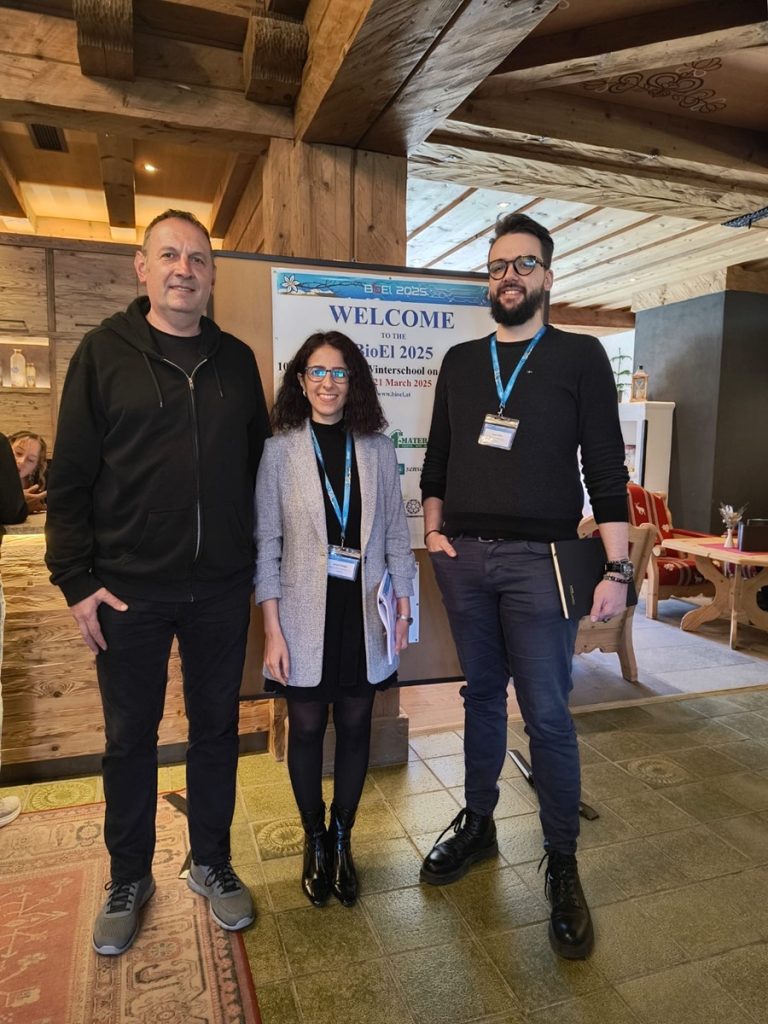
The event provided a valuable opportunity to network with fellow researchers, promote our work, and represent the EINSTEIN project on an international stage.