

Insights from Organic Innovation Days 2025
In November 2025, Miloš Rajković from the Vojvodina Organic Cluster (VOC) participated in the Organic Innovation Days, a key European event on research and innovation in organic agriculture, organized by TP Organics in Brussels.
The 2025 edition, held on 4–5 November, gathered a wide range of stakeholders – researchers, policymakers, advisors, and practitioners – around a shared goal: shaping the future of organic and agroecological food systems in Europe.
For initiatives like the EINSTEIN project, which aim to connect agriculture, food, and health through integrated platforms, such events provide not only visibility, but also strategic direction and alignment with EU-level priorities.
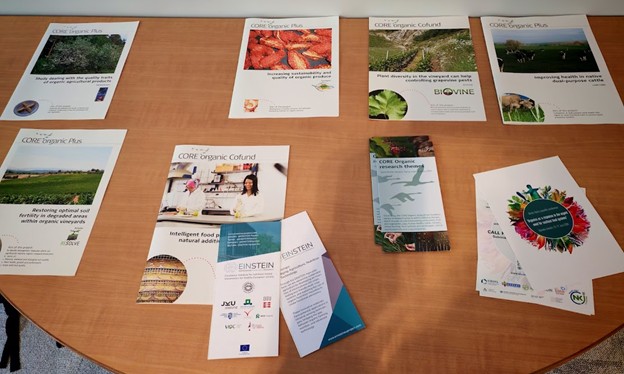
A space where research meets practice
Organic Innovation Days are not just about presenting results – they are about co-creating the future of research and innovation. This year’s talks emphasised agroecology as a key way to build food systems that can withstand shocks, as well as the need for better links between science and practice. A common theme in the sessions was that new ideas need to be grounded in real-world use and supported by collaboration across different fields.
“What clearly emerged from the discussions is that the future of agriculture depends on how well we connect knowledge, people and systems. This is exactly where initiatives like EINSTEIN can make a difference — not only by sharing knowledge, but by enabling its practical application across agriculture, food and health.” These priorities closely reflect the core approach of the EINSTEIN project.
From strategy to implementation
A central highlight of the event was the launch of the new Strategic Research and Innovation Agenda (SRIA) for organics and agroecology, developed through a broad, bottom-up consultation process across Europe.
The SRIA introduces the concept of a “triple lead for sustainability”, focusing on environment, biodiversity and climate, people, communities and livelihoods, and responsible innovation.
For the EINSTEIN project, this framework is particularly relevant, as it directly reflects the integrated approach the project is developing – connecting agricultural practices, food systems, and health outcomes through interconnected digital platforms.
Discussions on the future EU research framework (FP10) further emphasized the need for solutions that go beyond single-sector approaches. This aligns with EINSTEIN’s ambition to create a system where knowledge flows across domains – from farm-level data and practices to food processing, nutrition, and broader societal impact.
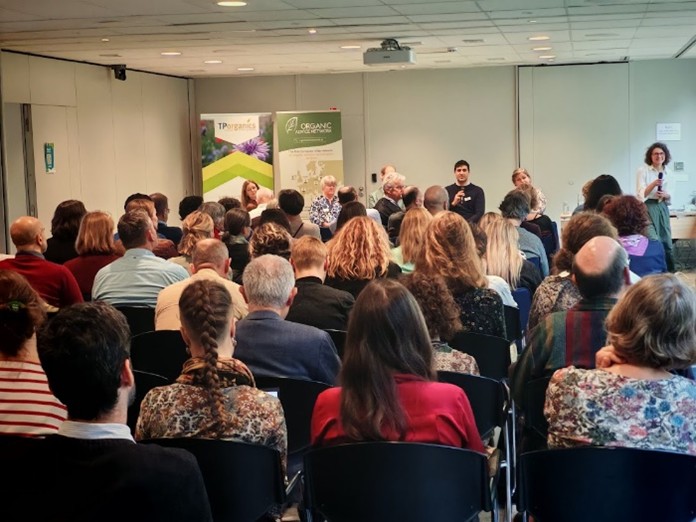
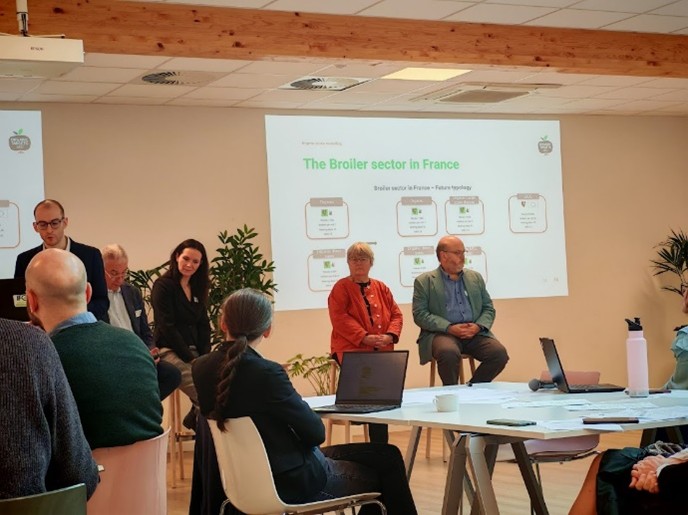
Another strong message was that we need to strengthen the multi-actor approach, make it easier for more people to get involved, and lower the barriers to participation, especially for farmers, small businesses, and local actors. EINSTEIN works in this exact area by bringing together a wide range of people and helping them apply their knowledge in real life through its platforms.
Strengthening knowledge systems and advisory networks
The event also highlighted the importance of Agricultural Knowledge and Innovation Systems (AKIS) in supporting the transition to organic farming. Key recommendations included improving access to advisory services, strengthening peer-to-peer learning among farmers, and ensuring better data availability for decision-making.
For the EINSTEIN project, these priorities are directly translated into the development of its digital platforms, particularly EINSTEIN Agro, which aims to support knowledge exchange, enable data-driven decision-making, and connect different actors within the agricultural and food system.
In this context, EINSTEIN contributes to strengthening AKIS by facilitating the flow of knowledge between researchers, advisors, and farmers, while also creating space for feedback from practice to research. This two-way interaction is essential for ensuring that innovation is both applicable and scalable.
At the same time, initiatives such as OrganicAdviceNetwork aim to build a strong European network of advisors and support the expansion of organic farming towards EU targets, including reaching 25% of agricultural land under organic management by 2030.
Together, these approaches highlight a shared direction — moving from fragmented knowledge systems toward more integrated, accessible, and practice-oriented solutions, which is at the core of the EINSTEIN concept.
Importance for the EINSTEIN project
Participation in Organic Innovation Days enables partners such as VOC to engage directly with the evolving European research and policy landscape.
The event confirmed a clear shift toward integrated, cross-sectoral solutions – exactly the approach that EINSTEIN is developing through its interconnected platforms (EINSTEIN Agro, Bio, and Food).
It also reinforced the importance of:
- linking research with practice
- building strong stakeholder networks
- developing tools that support real-world decision-making
Thinking about the future
The second day of the event, dedicated to the OrganicTargets4EU final conference, further demonstrated that the organic sector can act as a catalyst for broader transformation of agriculture and food systems.
One of the takeaways is that organic farming and agroecology are no longer seen as niche approaches, but as central elements of Europe’s transition toward sustainable and resilient food systems.
For VOC and the EINSTEIN consortium, the path forward is clear: continue to strengthen collaboration, expand networks, and develop solutions that bridge science, practice, and policy. Events like Organic Innovation Days remind us that meaningful change happens when these three dimensions move forward together.
Author: Vojvodina Organic Cluster – VOC, Serbia