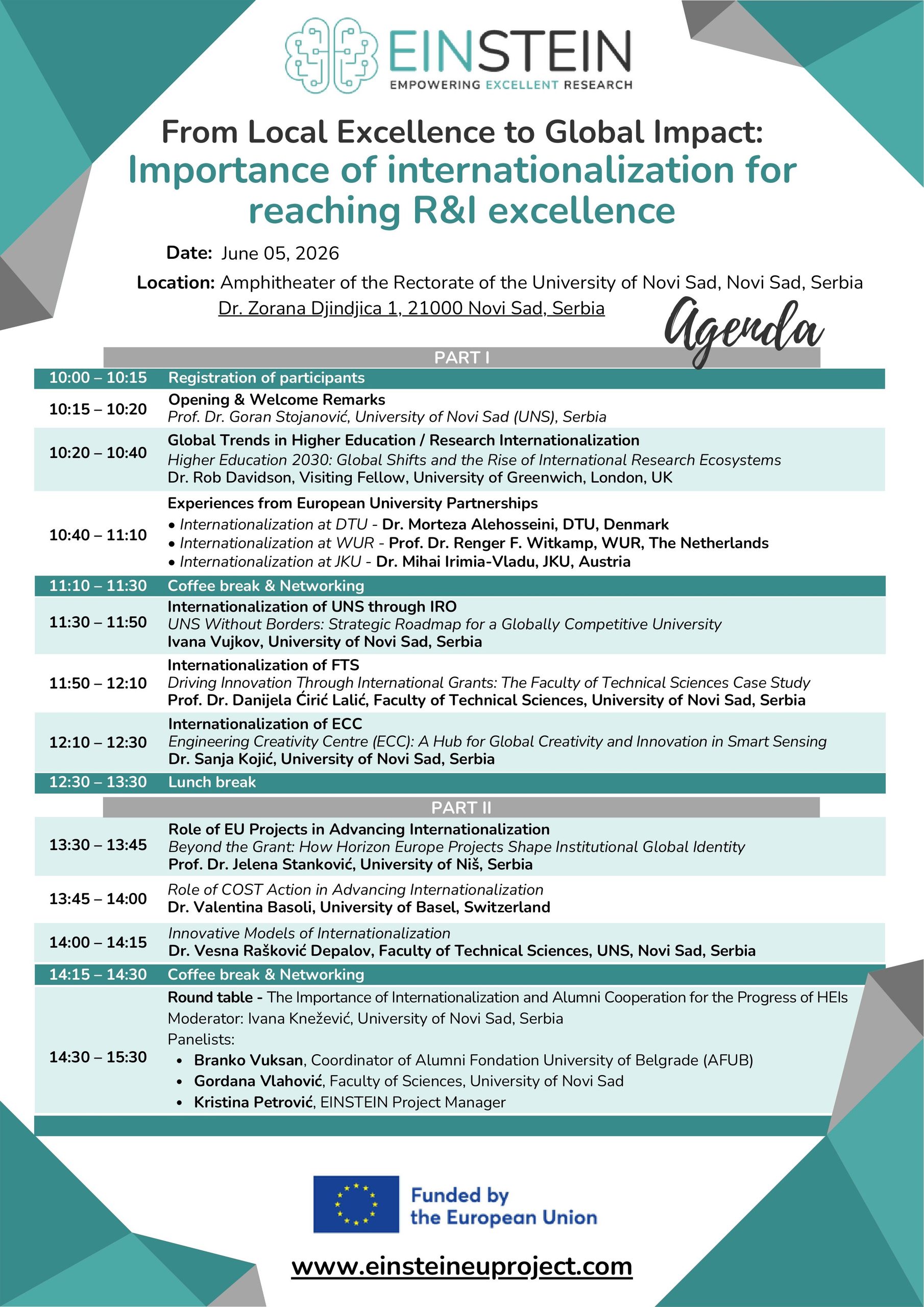
From Local Excellence to Global Impact: Importance of internationalization for reaching R&I excellence
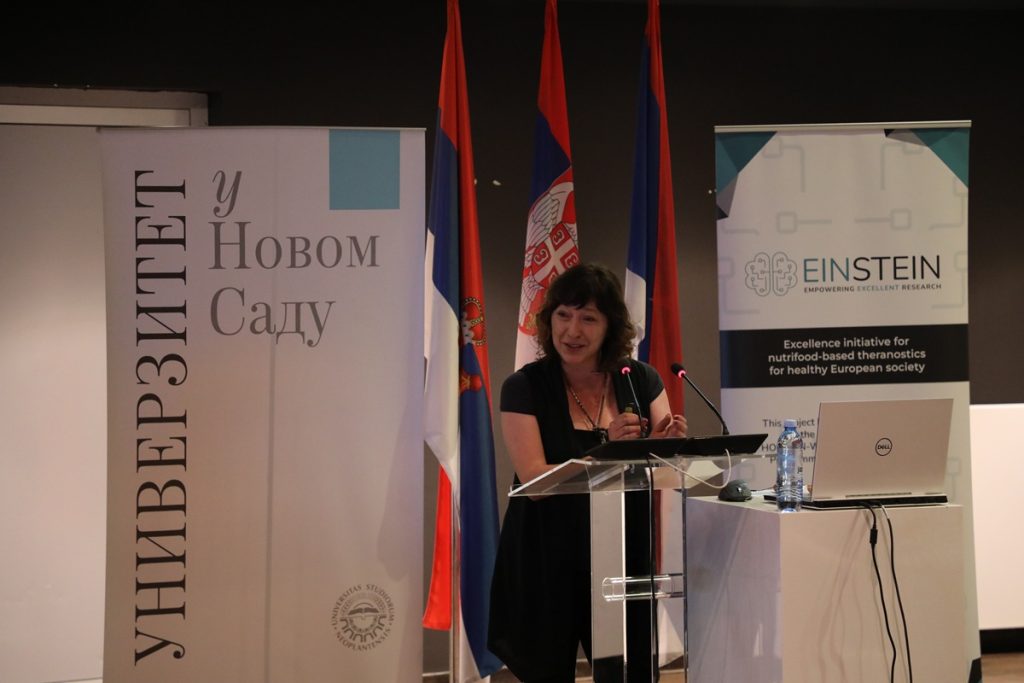
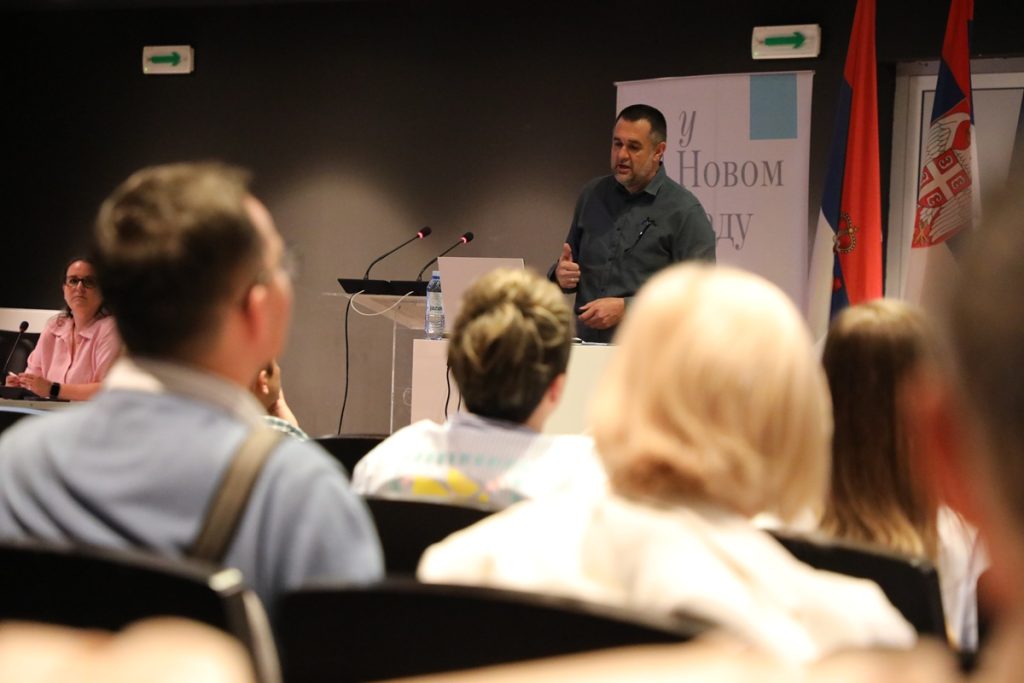
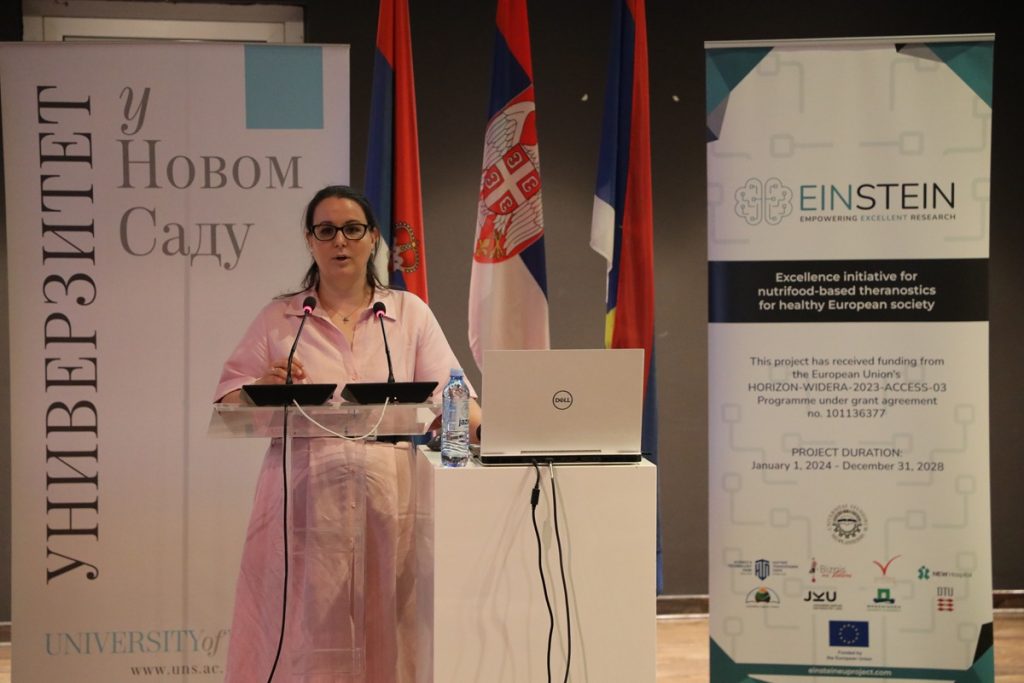
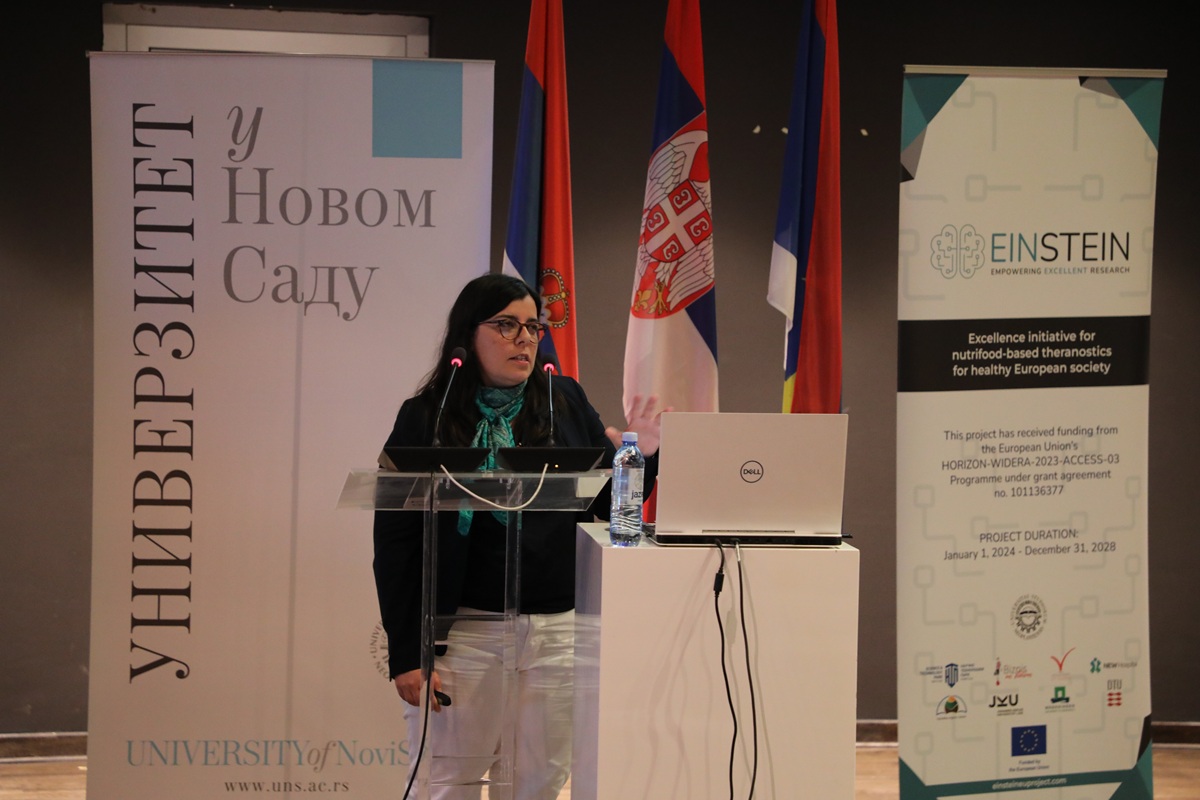
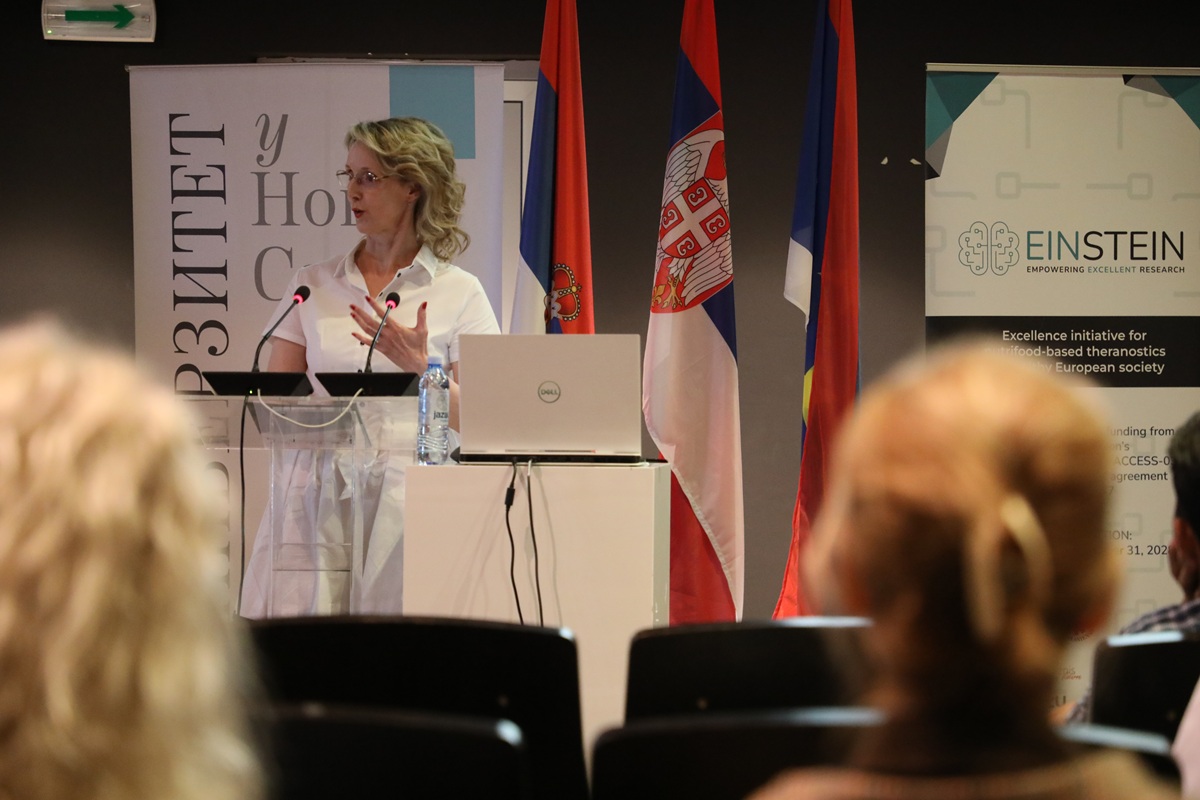
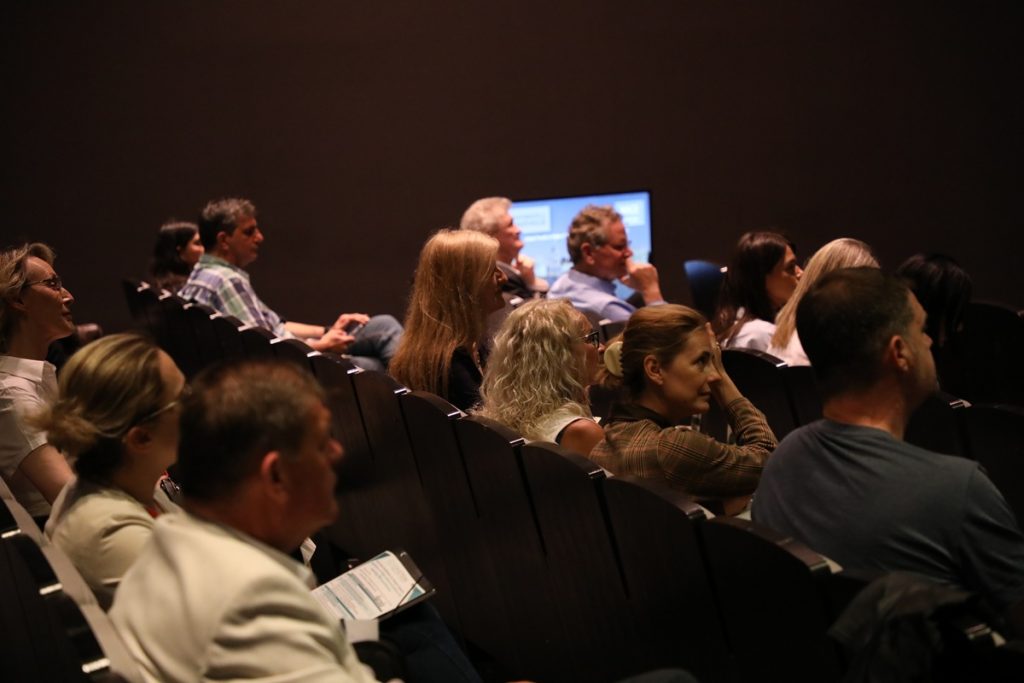
On June 5, 2026, the University of Novi Sad (UNS) hosted the conference titled “From Local Excellence to Global Impact: Importance of Internationalization for Reaching R&I Excellence.” Organized as part of the EINSTEIN project, the event brought together researchers, academic leaders, and industry representatives to explore how international collaboration can drive research and innovation (R&I) excellence. Held in the Amphitheatre of the UNS Rectorate, the conference served as a platform for exchanging best practices, addressing systemic challenges, and fostering long-term partnerships across borders.
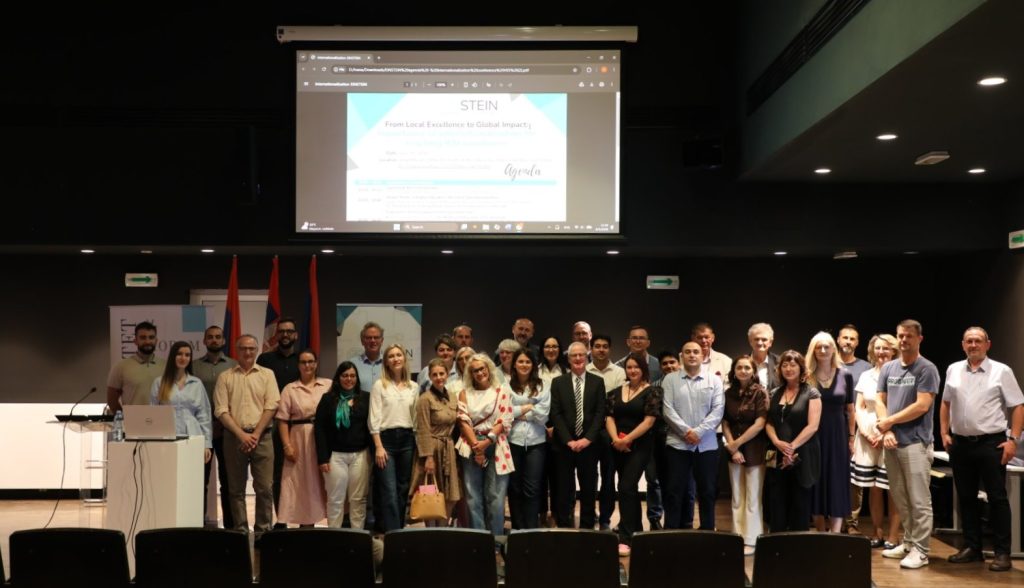
The conference was structured into two main segments, each featuring expert presentations and case studies from leading European institutions. The first segment focused on global trends in higher education internationalization, while the second examined institutional strategies, EU-funded initiatives, and innovative models for enhancing international cooperation.
A highlight of the event was a roundtable discussion on the role of alumni networks in sustaining international engagement. Through these discussions, participants identified both opportunities and obstacles in Serbia’s and the broader region’s efforts to strengthen their global academic presence.
Global Trends and Institutional Strategies in Internationalization
The conference opened with a keynote by Dr. Rob Davidson, Visiting Fellow at the University of Greenwich, who outlined the growing importance of international university partnerships in producing world-class knowledge. Davidson emphasized that cross-border research collaborations align with the United Nations Sustainable Development Goals (SDGs) but also face significant operational hurdles. These include stricter “knowledge security” regulations, unequal resource allocation, and inconsistent leadership support challenges that institutions must navigate to fully leverage international partnerships.
Representatives from three leading European universities: Technical University of Denmark (DTU), Wageningen University & Research (WUR), and Johannes Kepler University (JKU) shared their institutional strategies for fostering internationalization. Dr. Morteza Alehosseini (DTU) presented a compelling case for structural internationalization, noting that 60% of DTU’s researchers have an international background, and 73% of their scientific publications involve international co-authors. However, he also highlighted systemic risks, such as dependency on competitive funding and the need for risk-based governance to protect technology from illegitimate access. Additionally, DTU faces challenges related to housing, family relocation, language adaptation, and staff retention, underscoring the human and logistical dimensions of internationalization.
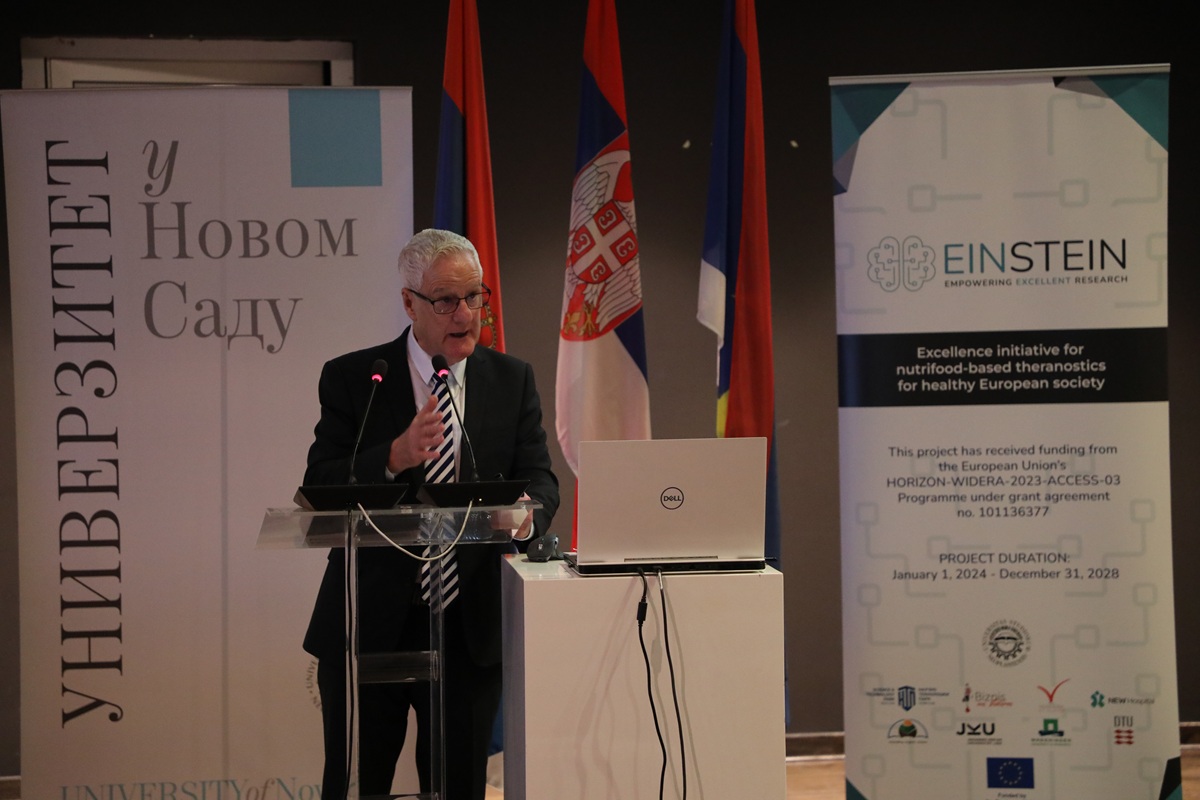
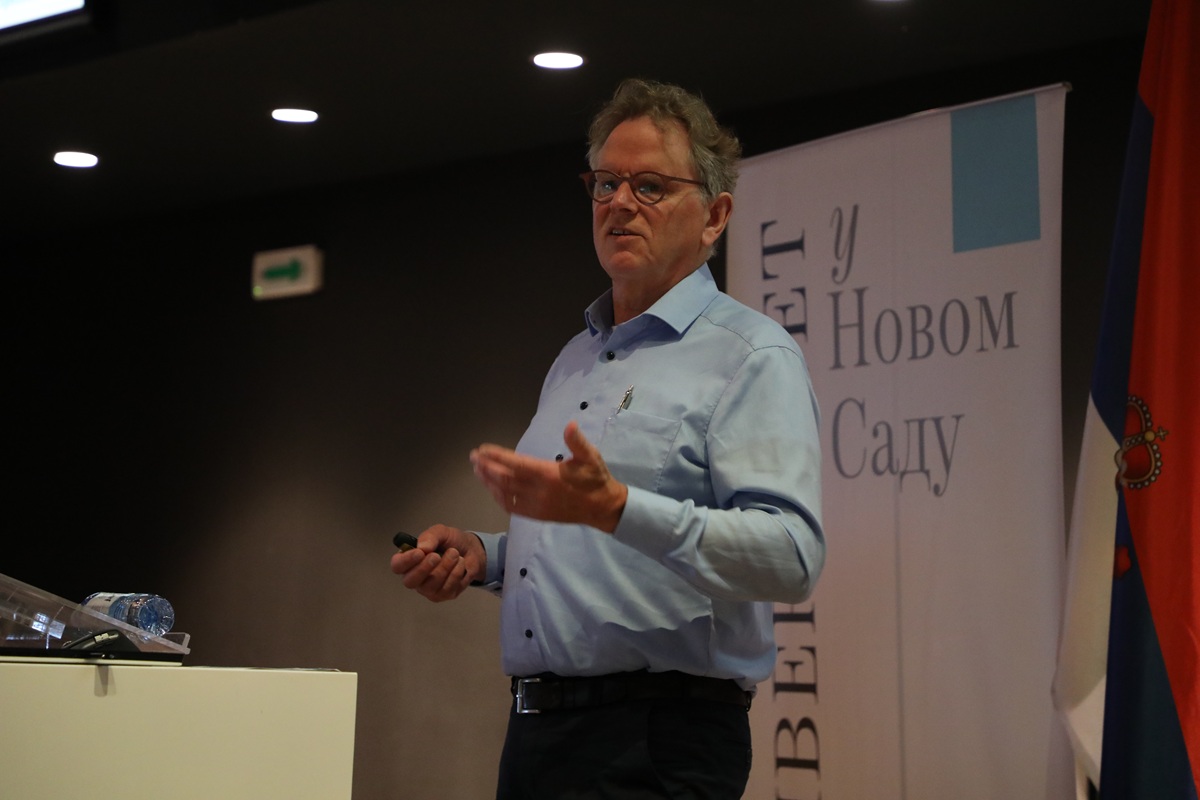
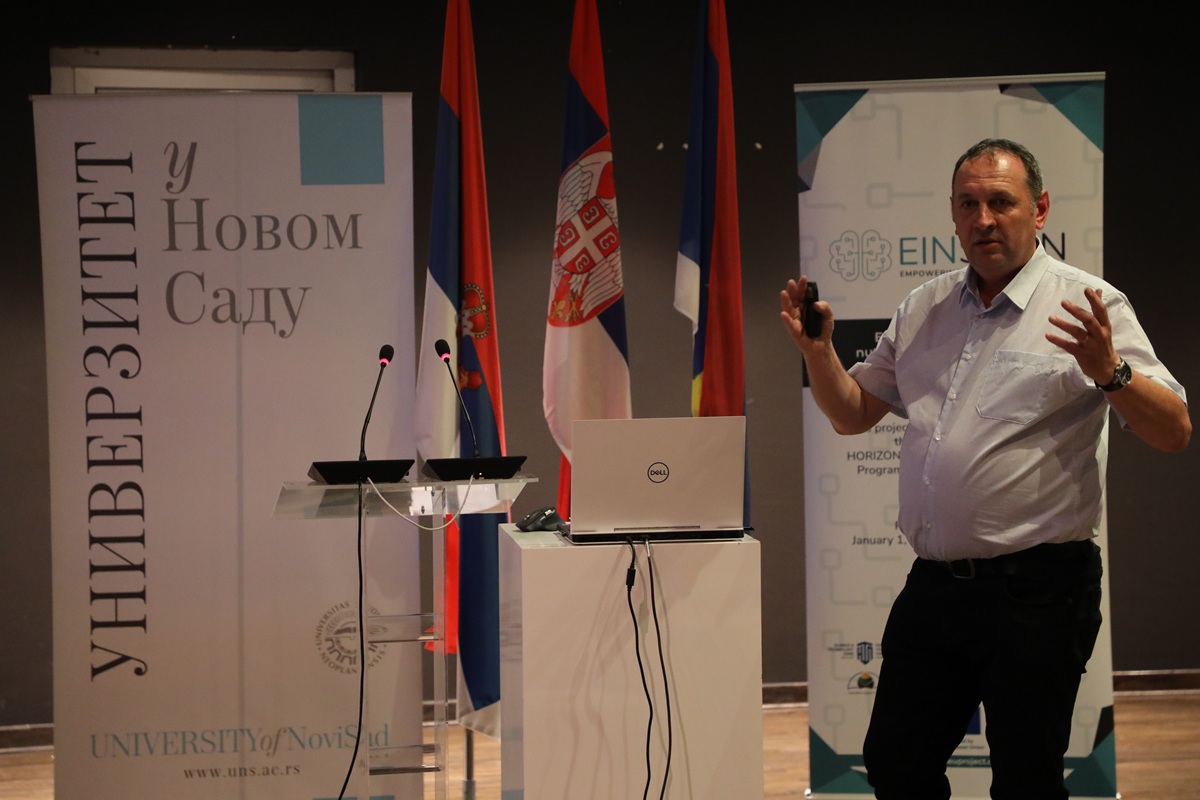
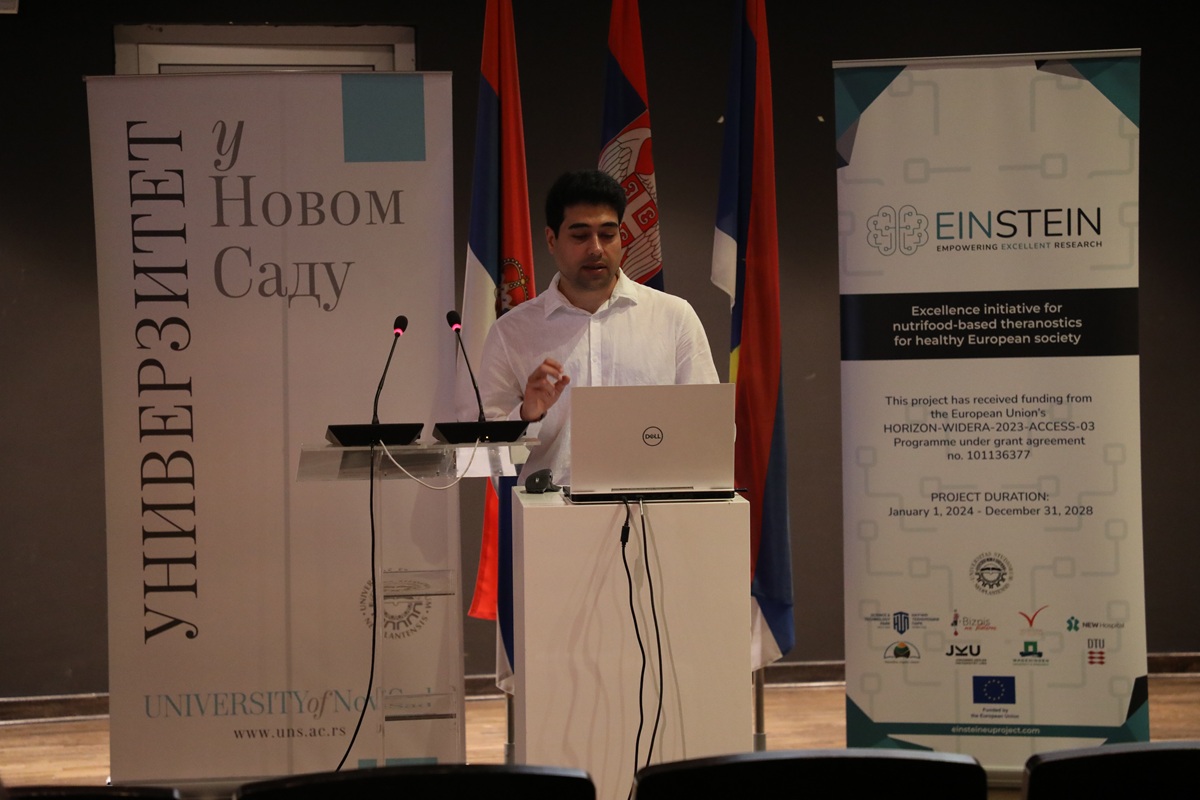
Prof. Dr. Renger F. Witkamp (WUR) discussed how internationalization serves as a core principle for driving student development, scientific excellence, and solutions to global sustainability challenges. At WUR, 40% of master’s students and 68% of PhD graduates are non-Dutch, supported by initiatives such as English-taught programs, Erasmus exchanges, and international internships. The university’s global engagement is further strengthened through over 2,000 collaborations spanning 100 countries, demonstrating how international integration can enhance both educational and research outcomes.
Meanwhile, Dr. Mihai Irimia-Vladu (JKU) showcased how English-taught programs at all degree levels remove barriers for international students and researchers. JKU’s active participation in the European Campus of City-Universities (EC2U), which connects 250,000 students, and its mobility grants further illustrate how institutional policies can facilitate global mobility and intercultural learning.
Internationalization at the University of Novi Sad: Progress and Challenges
A key focus of the conference was the internationalization efforts at the University of Novi Sad (UNS). Ivana Vujkov, from UNS’s International Relations Office (IRO), outlined the university’s strategic initiatives to enhance global visibility, including the EPIR project for digitalizing foreign document recognition and the successful implementation of Erasmus+ Blended Intensive Programmes (BIPs). Notably, the “Internet of Things and 3D Printing” BIP was recognized by the European Commission as a best practice, highlighting UNS’s commitment to innovative educational models.
At the faculty level, Prof. Dr. Bojan Lalić (Faculty of Technical Sciences, UNS) presented a case study on transforming isolated “islands of excellence” into an institutional research and innovation ecosystem. With 183 active international projects, the Faculty of Technical Sciences has adopted a five-pillar strategy focusing on governance, digital infrastructure, and human capital development. This approach ensures that research capacity becomes a systemic asset rather than relying on individual efforts, positioning UNS as a competitive player in the European research landscape.
The Role of EU Projects in Shaping Global Academic Identities
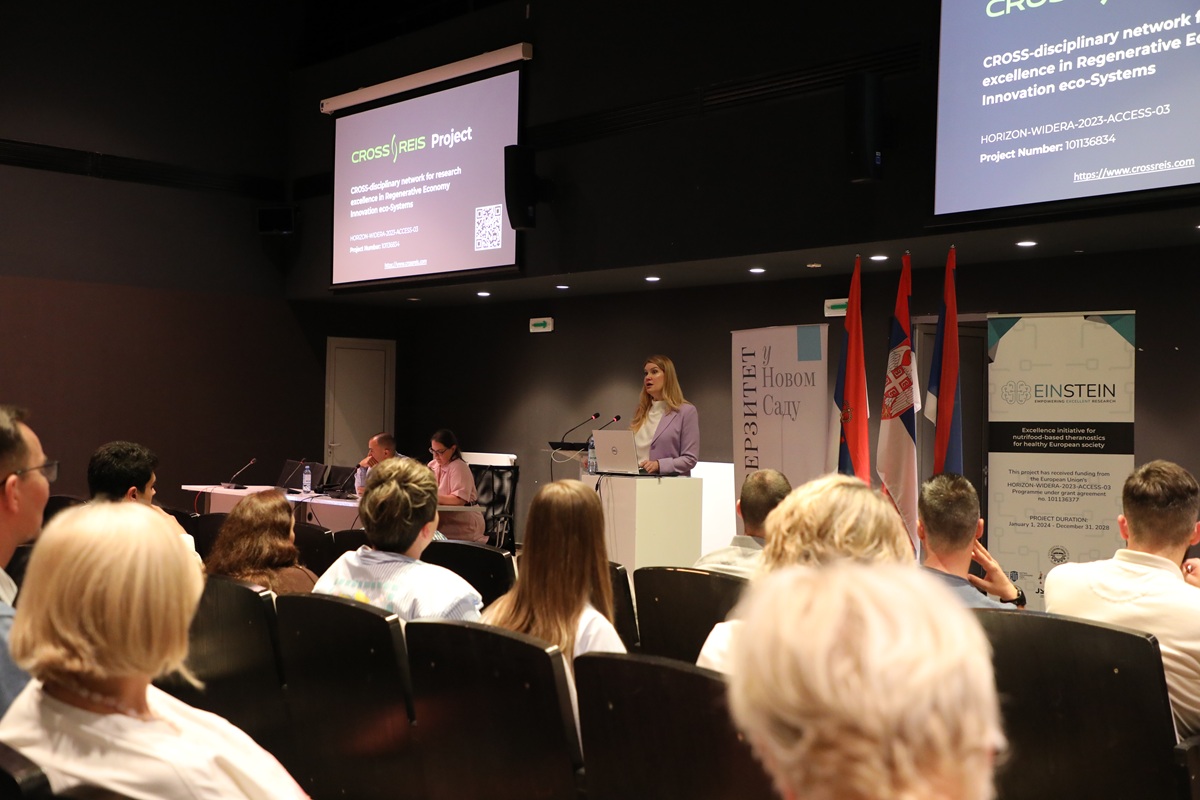
The second segment of the conference shifted focus to the impact of EU-funded projects in advancing internationalization. Prof. Dr. Jelena Stanković (University of Niš) discussed how initiatives like UR-DATA, CROSS-REIS, and UR-WISE contribute to shaping an institution’s global identity beyond initial funding. These projects have led to concrete advancements, including the launch of the “Journal of Regenerative Economics” and the establishment of the Serbian section of the European Regional Science Association (SERSA), as well as partnerships with prestigious institutions such as the University of Cambridge and the University of Bologna.
Dr. Valentina Basoli (University of Basel) further emphasized the role of COST Actions in fostering networking, training, and mobility. Using the NetwOArk project as a case study, she demonstrated how Short-Term Scientific Missions (STSMs) can transform initial connections into collaborative publications and future consortia. Basoli argued that genuine internationalisation begins with people, and that COST Actions complement Horizon Europe funding by investing in human capital and institutional relationships.
Innovative Models and the Commercialization of Research
In a session on innovative models of internationalisation, Dr. Vesna Rašković Depalov (Faculty of Technical Sciences, UNS) challenged researchers to ensure their work addresses real-world problems. Highlighting that over 2,800 European deep-tech startups originate from academic institutions, she stressed the importance of early market validation and the commercialisation of research through spin-offs, IP licensing, and infrastructure services. Rašković Depalov also highlighted initiatives such as EIT Infrabooster, the Enterprise Europe Network, and Research-to-Business (R2B) events, which bridge the gap between academia and industry, promoting global innovation and technology transfer.
The Role of Alumni and the Future of Internationalization
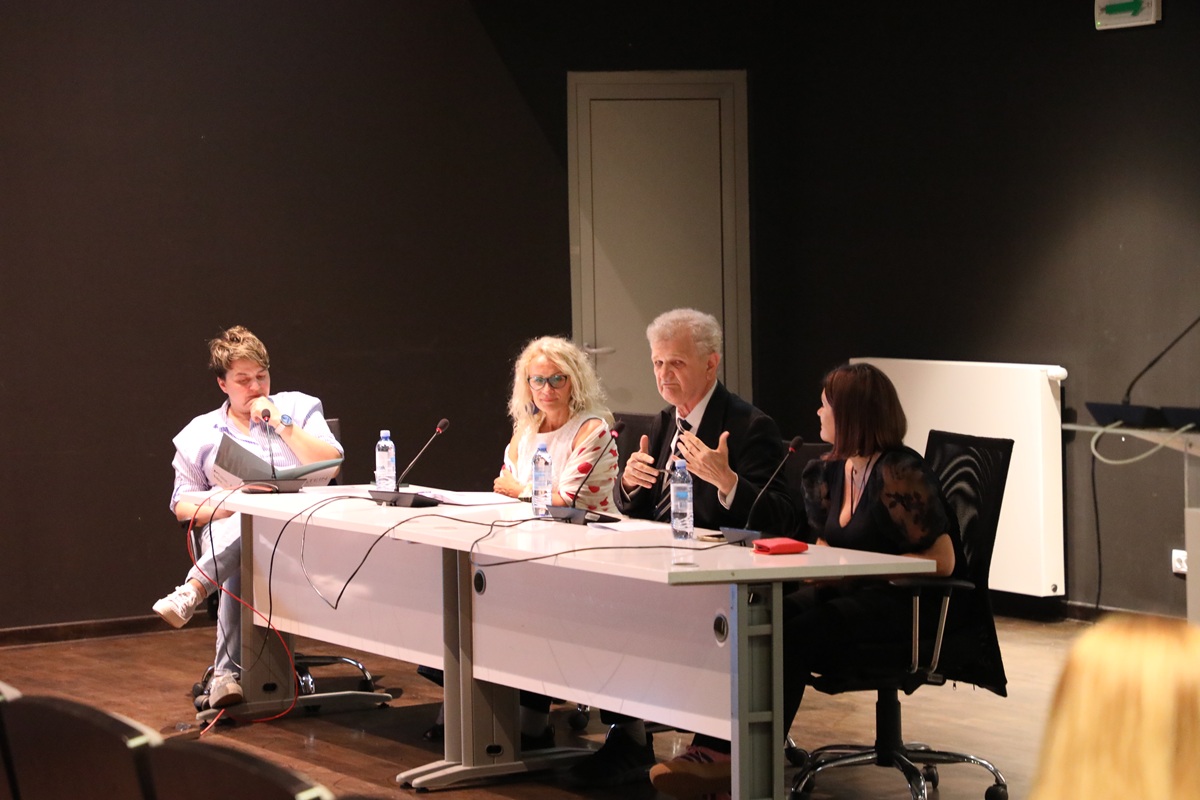
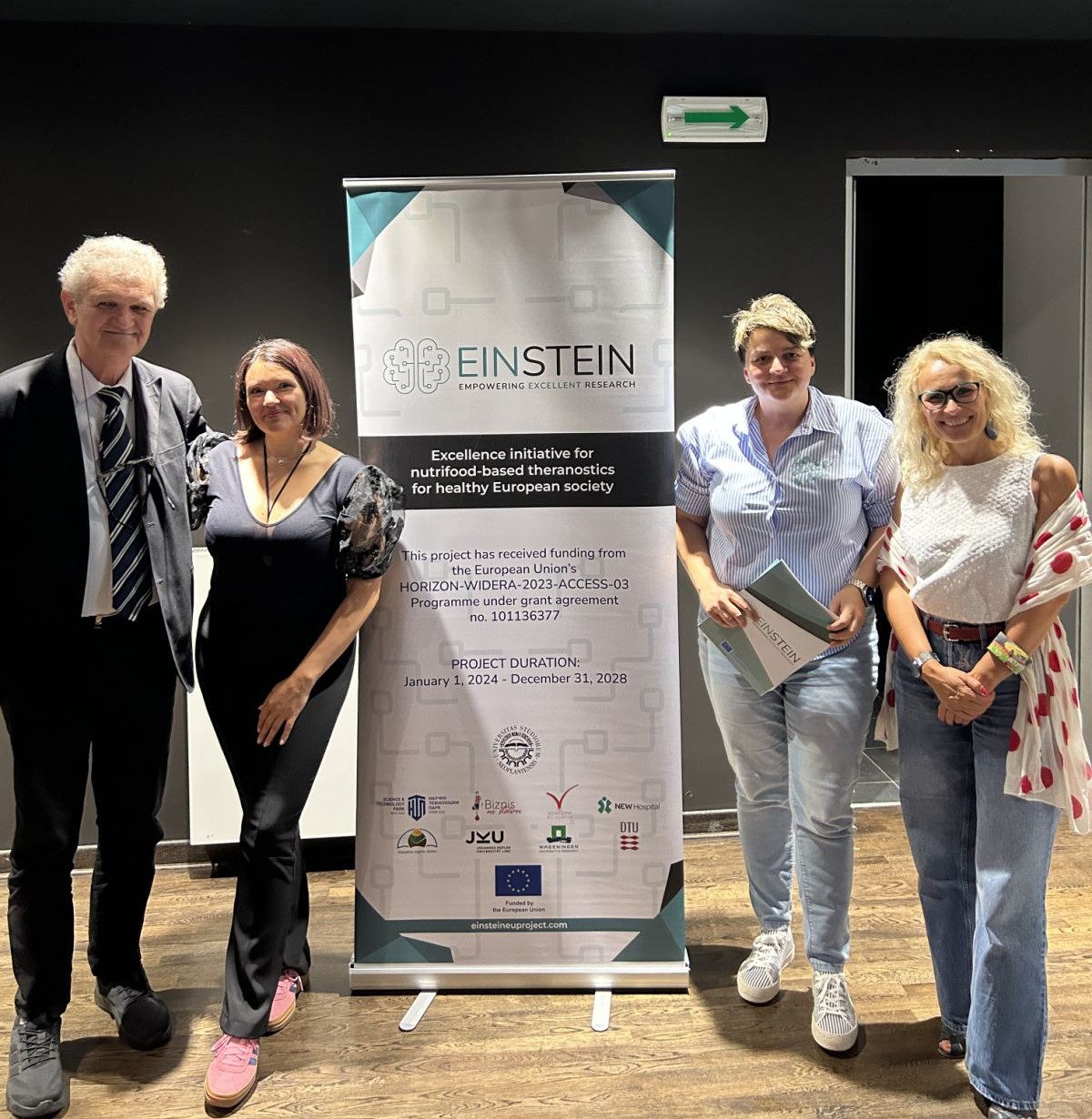
The conference concluded with a roundtable discussion moderated by Ivana Knežević (UNS), featuring Branko Vuksan (Alumni Foundation of the University of Belgrade), Gordana Vlahović (Faculty of Sciences), and Kristina Petrović (EINSTEIN Project Manager). The panellists identified Serbia’s and the region’s lack of visibility, coordination, and mutual awareness as major obstacles to stronger international positioning. They emphasised that sustainable international cooperation is built on personal connections, trust, and long-term engagement, with alumni networks playing a crucial role in bridging institutions with the global academic and professional community.
A key proposal from the discussion was to establish an international alumni association to facilitate broader cooperation and knowledge exchange. The panellists also underscored the need to educate students as “global citizens” and to leverage EU projects to attract international students and researchers. As one audience member suggested, successful internationalisation will be evident when institutions transition from actively seeking collaborations to being sought after by international partners.
Conclusion
The conference in Novi Sad provided a comprehensive overview of the challenges and opportunities in higher education internationalisation. From institutional strategies and EU-funded projects to innovative commercialisation models and alumni engagement, the discussions underscored that internationalisation is not merely a goal but a continuous process that requires systemic support, investment in human capital, and strategic partnerships.
For institutions in Serbia and the Western Balkans, the path forward involves overcoming isolation, enhancing coordination, and fostering trust-based relationships. By embracing EU funding opportunities, strengthening alumni networks, and aligning research with global challenges, universities can position themselves as key players in the international academic arena. As the conference demonstrated, the future of higher education lies in collaboration, adaptability, and a shared commitment to excellence—values that will shape the next generation of global scholars and innovators.
Download the full conference agenda here and explore the highlights of the conference through our photo gallery on the following link.