

The EINSTEIN project was presented during the 93rd International Agricultural Fair, held from 16 to 21 May 2026 at the Novi Sad Fair, one of the most important agricultural events in the Western Balkans. The Fair traditionally gathers farmers, producers, processors, companies, researchers, institutions, students and visitors interested in new solutions in agriculture and food production. This event brought together more than 1000 exhibitors from Serbia and around 40 countries, with around 100.000 visitors registered at the entrances.
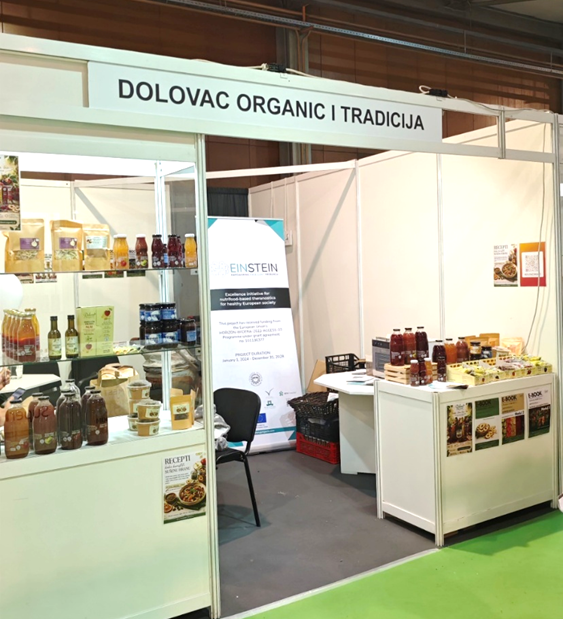
EINSTEIN was presented in the organic products area at the stand of Dolovac Organic i Tradicija, a member of the Vojvodina Organic Cluster (VOC). This was a practical opportunity to connect the project with a real organic producer, local food processing and direct communication with visitors.
During the Fair, visitors had the opportunity to see and taste organic fruit-based products and learn more about food processing, drying and the use of organic raw materials in developing healthier and more practical food products. In the context of the EINSTEIN project, special attention was given to fruit rolls, which are already used as a natural and edible material in edible electronics devices and have shown very promising performance.
Although organic products are in a smaller exhibition hall, this stand had direct meaningful communication with visitors throughout Fair. Many visitors were interested in organic products, especially fruit rolls and dried fruit products, which created a natural starting point for explaining the EINSTEIN project in a practical and accessible way. Through these conversations, the project was presented not only as a research initiative, but also through concrete examples of how organic raw materials, food processing and innovative applications such as edible electronics can be connected.
This direct exchange with farmers, consumers, small processors and other fair visitors helped bring EINSTEIN closer to audiences outside the scientific environment. This made it possible to explain the project’s focus on nutrifood-based theranostics and its broader aim to connect agriculture, food, electronics and medicine through practical examples that visitors could see, taste and discuss.
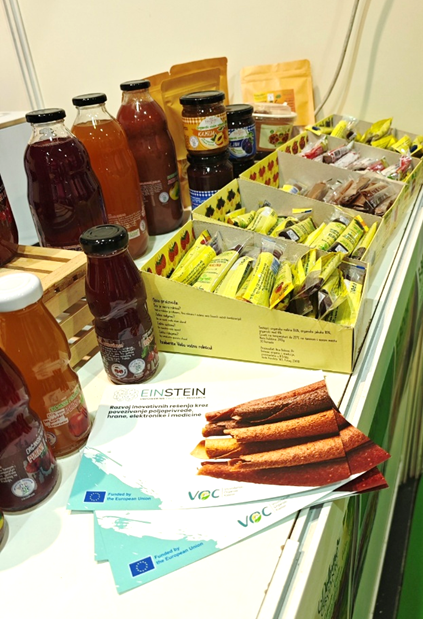
The presentation also strengthened the link between the EINSTEIN project and local organic producers. By being presented at the stand of a VOC member, the project was connected with concrete products, processing practices and questions coming directly from visitors. This type of interaction is important for understanding consumer interest, practically communicating research and creating space for future cooperation between science, producers and wider food sector.